Tsavo Red, Savannah Ochre & Coral Coast
This rammed-earth wall celebrates the natural colours and textures of African soil.
Each compacted layer creates its own tone and character, forming a finish that feels both ancient and contemporary.
The visible bands tell the story of how the wall was built—layer by layer, directly from the earth.
“We let the earth tell its story.”
Inspired by the textured earthen surfaces of traditional Maasai homesteads, this rammed-earth wall celebrates the beauty of imperfection.
Its deep red tones,
exposed grains and naturally rugged patches give the surface an almost hand-worked quality recalling a time when buildings were shaped directly from the land.
The horizontal ramming layers remain visible, allowing the wall to tell the story of its construction rather than hiding it behind plaster.
“Maasai Earth Raw Heritage Finish.”
Enkaji Red & Raw Heritage
Stone Earth
At first glance, this wall could easily be mistaken for reinforced concrete but it is made from compacted soil.
The natural grey tones, exposed grains and layered texture create a strong, monolithic appearance while still revealing the character of earth.
Its beauty comes from the material itself: no paint, no artificial surface pattern just soil, carefully selected, mixed and rammed layer by layer.
“It looks like concrete. It is earth.”

Sunbaked Ochre, Savannah Earth, Rift Valley Red
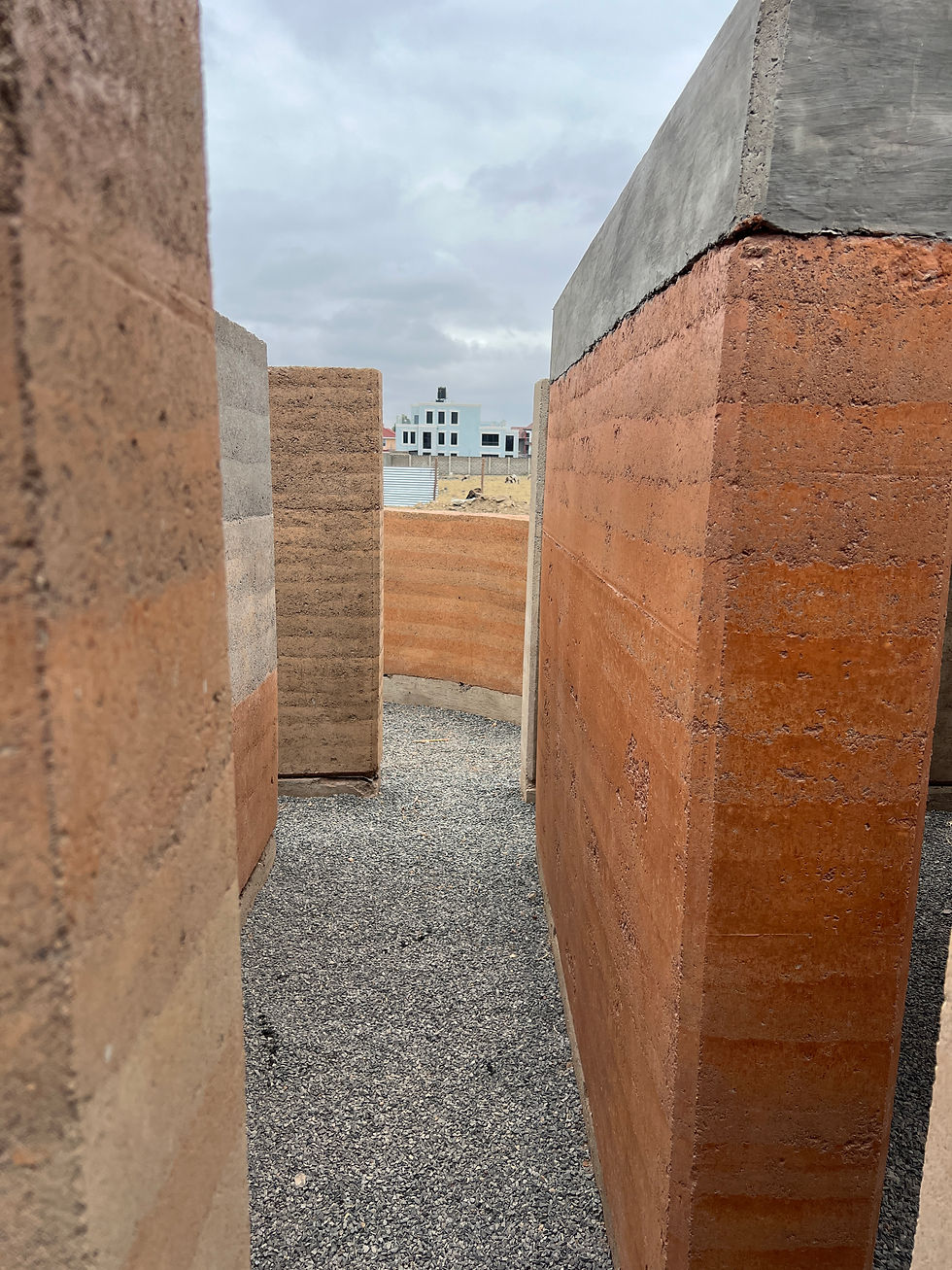
This wall celebrates the natural variation of earth through three distinct soil tones, creating a layered finish that feels almost geological.
The exposed grains, subtle roughness and visible ramming lines give the wall depth and character, while the changing colours reflect the landscapes of East Africa.
“Different soils. Different stories. One wall shaped from the earth.”
This wall turns rammed earth into a natural pattern, with soft flowing bands of cream, sand and warm brown.
The layers feel almost like wind-shaped dunes or sediment formed over time, giving the wall movement while keeping the raw texture of earth visible.
“Where Lamu’s Coral Heritage Meets the Art of Rammed Earth.”
This wall has a soft rose, clay and salmon tone, giving rammed earth a warmer and more elegant character.
The surface is relatively fine and compact, with gentle horizontal ramming lines that add depth without making the wall feel too rough.
It feels natural, calm and refined — almost like sun-washed earth at sunset.
“Earth, softened by colour and shaped layer by layer.”

Coastal Dunes / Lamu Cream
Desert Rose
Savannah Strata
Volcanic Black · Rift Stone · Tsavo Red
Volcanic Grey


A bold rammed-earth finish built from alternating charcoal-grey and deep red soil bands.
The rough exposed grain gives it a strong handcrafted texture,
while the curved form makes the layers feel almost like geological strata wrapping around the wall.
“Two earth tones, layered into one powerful African expression.”
Heritage Clay
Dune Earth - DESERT
Highland Earth

This wall combines deep charcoal, weathered grey and rich red earth tones,
creating a dramatic layered finish inspired by volcanic landscapes and the red soils of East Africa.
The exposed grains and visible ramming lines give the surface a raw, natural texture that changes with light.
“Three soils. Three characters. One wall shaped from the earth.”

This finish uses alternating natural earth tones to create a rhythmic, almost hand-crafted pattern. The soft beige,
warm ochre and grey-brown bands give the wall a strong African character,
while the visible grains and slightly rough texture keep the material honest and natural.
“Layer by layer, the landscape becomes architecture.”

This wall has a softer, more natural brown character, with visible stones, grains and ramming layers giving it a raw, handcrafted appearance.
The lower section feels smoother and more compact, while the upper lifts are intentionally more textured,
showing the material and construction process.
It has the character of weathered earth and traditional African building, but expressed in a modern rammed-earth wall.
“Raw earth, visible layers, naturally crafted.”

A warm, earthy rammed-earth finish with soft brown tones and subtle horizontal layers. Compared with the rougher samples, this wall has a more refined and compacted surface, while still keeping the natural grain, small stones and hand-crafted character of earth.
The colour feels calm, grounded and distinctly African — inspired by acacia bark, dry savannah soil and traditional earth-built homes.
“Simple earth, refined by craft.”

This wall has a soft sandy-beige tone with darker natural bands, giving it a calm, weathered appearance. The visible ramming layers and exposed grains create a textured surface that feels almost like sedimentary rock formed naturally over time.
Its pale colour gives the rammed earth a lighter, more contemporary character while still keeping the raw identity of soil.
“Soft earth tones, layered naturally into architecture.”
Sunset Earth
Self-Supporting Earth Vault

This wall carries a rich sun-baked orange and terracotta character, with soft horizontal bands created naturally through the ramming process.
The exposed grains and changing tones give it warmth and movement, almost like layers of earth shaped by time.
The finish feels especially connected to East African soil, dry landscapes and traditional earth architecture, while still looking contemporary.
“Warm earth, layered by hand, shaped into architecture.”

This vaulted roof is designed to support itself through compression, allowing the curved form to carry loads toward the supporting walls without relying on a conventional flat slab.
The vault creates a strong architectural character while pairing beautifully with rammed-earth walls, using geometry and compression rather than excessive structural material.
“A roof shaped by geometry — self-supporting, expressive and rooted in traditional building knowledge.”
TerraCraft.Earth at the Pan African Biennale
Earth & Compression
Sunlight on Earth
Earth Sculpted into Form
Earth That Feels Familiar

This space combines rammed-earth walls with a self-supporting vaulted roof,
where the curved geometry allows the vault to carry loads mainly through compression and transfer them toward the supporting walls.
The result is a warm, sculptural interior that brings together earth, masonry and traditional vault-building principles in a contemporary way.
“Built with earth below, shaped by compression above.”

Our rammed-earth pieces at the Pan African Biennale explored earth beyond architecture — transforming the same material used for walls into sculptural furniture and functional objects.
The layered colours, exposed grains and curved forms celebrate the natural character of soil while showing how rammed earth can move from building material to contemporary African design.
“From the ground, to the wall, to the object — earth becomes design.”

There is something deeply familiar about seeing soil become a wall. It reconnects us with the way generations before us built homes and huts directly from the land — using earth not only as a material, but as part of everyday life.
Rammed earth carries that memory forward in a new form: stronger, more refined and contemporary, but still honest to its origin. The colour, texture and visible layers make the wall feel warm, grounded and human.
“The same earth our fathers built with, reimagined for the architecture of today.”
Rammed Earth

Tsavo Red, Savannah Ochre & Coral Coast

These rammed-earth pieces show how soil can move beyond walls and become sculpture, furniture and functional design.
Their tapered and cylindrical forms reveal the natural layers of compaction, while the rough grains and changing earth tones give every piece its own character.
The forms feel contemporary, yet the material carries a strong memory of traditional African earth building and hand-shaped objects made from the land.
“From soil to sculpture — the earth becomes an object of design.”
This rammed-earth wall celebrates the natural colours and textures of African soil.
Each compacted layer creates its own tone and character, forming a finish that feels both ancient and contemporary.
The visible bands tell the story of how the wall was built—layer by layer, directly from the earth.
“We let the earth tell its story.”


Enkaji Red & Raw Heritage
Inspired by the textured earthen surfaces of traditional Maasai homesteads, this rammed-earth wall celebrates the beauty of imperfection.
Its deep red tones,
exposed grains and naturally rugged patches give the surface an almost hand-worked quality recalling a time when buildings were shaped directly from the land.
The horizontal ramming layers remain visible, allowing the wall to tell the story of its construction rather than hiding it behind plaster.
“Maasai Earth — Raw Heritage Finish.”
When sunlight hits a rammed-earth wall, the material comes alive. The light catches every grain, layer and slight imperfection, making the surface feel warmer, deeper and more tactile.
The red earth becomes richer, the pale tones become softer, and the shadows reveal the hand-crafted texture of the wall. It creates a feeling that is warm,
grounded and almost timeless — like the building belongs naturally to the land around it.
“When the sun touches earth, the wall begins to tell its story.”
Stone Earth

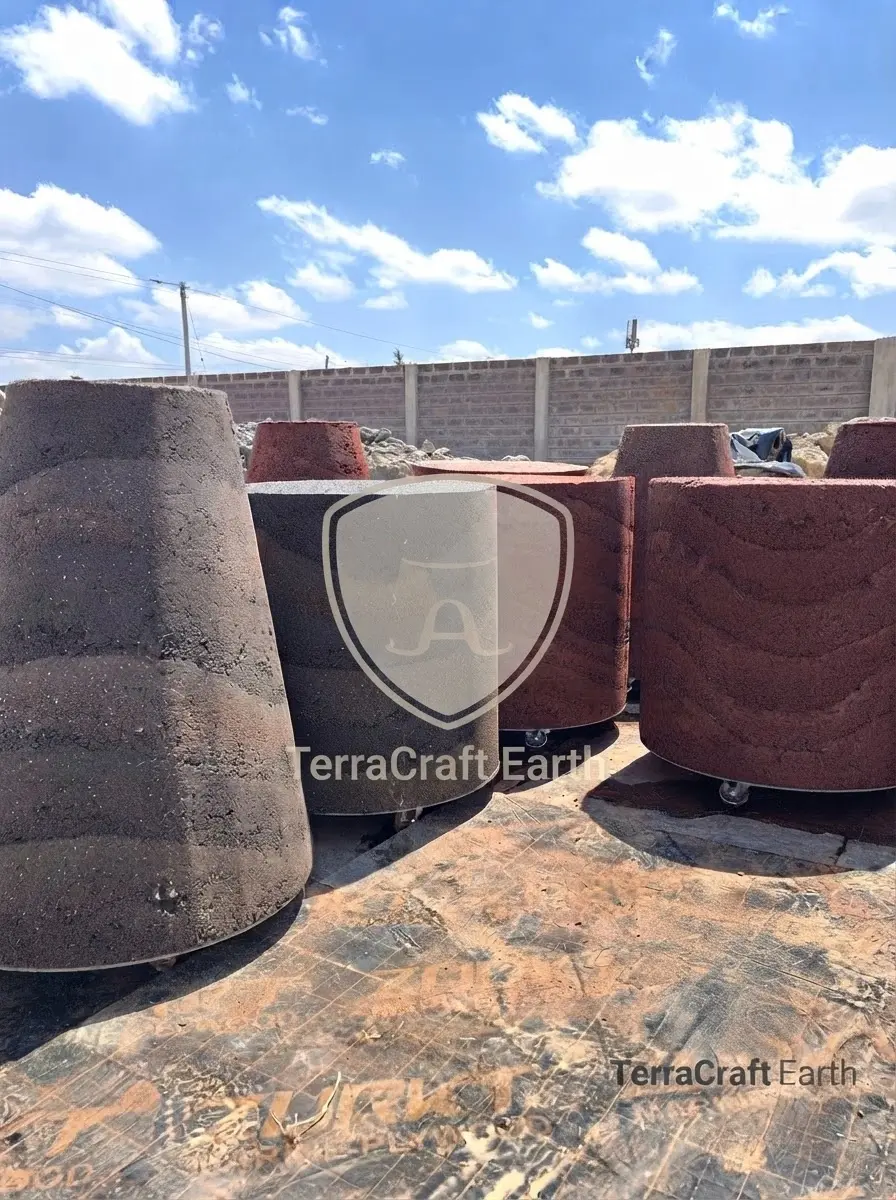
Volcanic Earth Sculpted Rammed Form
At first glance, this wall could easily be mistaken for reinforced concrete but it is made from compacted soil.
The natural grey tones, exposed grains and layered texture create a strong, monolithic appearance while still revealing the character of earth.
Its beauty comes from the material itself: no paint, no artificial surface pattern just soil, carefully selected, mixed and rammed layer by layer.
“It looks like concrete. It is earth.”
Sunbaked Ochre,
Savannah Earth,
Rift Valley Red
This wall celebrates the natural variation of earth through three distinct soil tones, creating a layered finish that feels almost geological.
The exposed grains, subtle roughness and visible ramming lines give the wall depth and character, while the changing colours reflect the landscapes of East Africa.
“Different soils. Different stories. One wall shaped from the earth.”
This piece shows how rammed earth can take on a completely different character through dark volcanic soil tones. The deep charcoal colour,
exposed grains and visible compaction bands make the surface feel bold, raw and sculptural.
Despite its almost stone-like appearance, the piece is made from compacted earth — not concrete and not painted black.
“Earth can be red, brown, grey or almost black — every soil carries its own identity.”
Coastal Dunes / Lamu Cream

This wall turns rammed earth into a natural pattern, with soft flowing bands of cream, sand and warm brown.
The layers feel almost like wind-shaped dunes or sediment formed over time, giving the wall movement while keeping the raw texture of earth visible.
“Where Lamu’s Coral Heritage Meets the Art of Rammed Earth.”

Desert Rose
This wall has a soft rose, clay and salmon tone, giving rammed earth a warmer and more elegant character.
The surface is relatively fine and compact, with gentle horizontal ramming lines that add depth without making the wall feel too rough.
It feels natural, calm and refined — almost like sun-washed earth at sunset.
“Earth, softened by colour and shaped layer by layer.”
Volcanic Grey
A bold rammed-earth finish built from alternating charcoal-grey and deep red soil bands.
The rough exposed grain gives it a strong handcrafted texture,
while the curved form makes the layers feel almost like geological strata wrapping around the wall.
“Two earth tones, layered into one powerful African expression.”
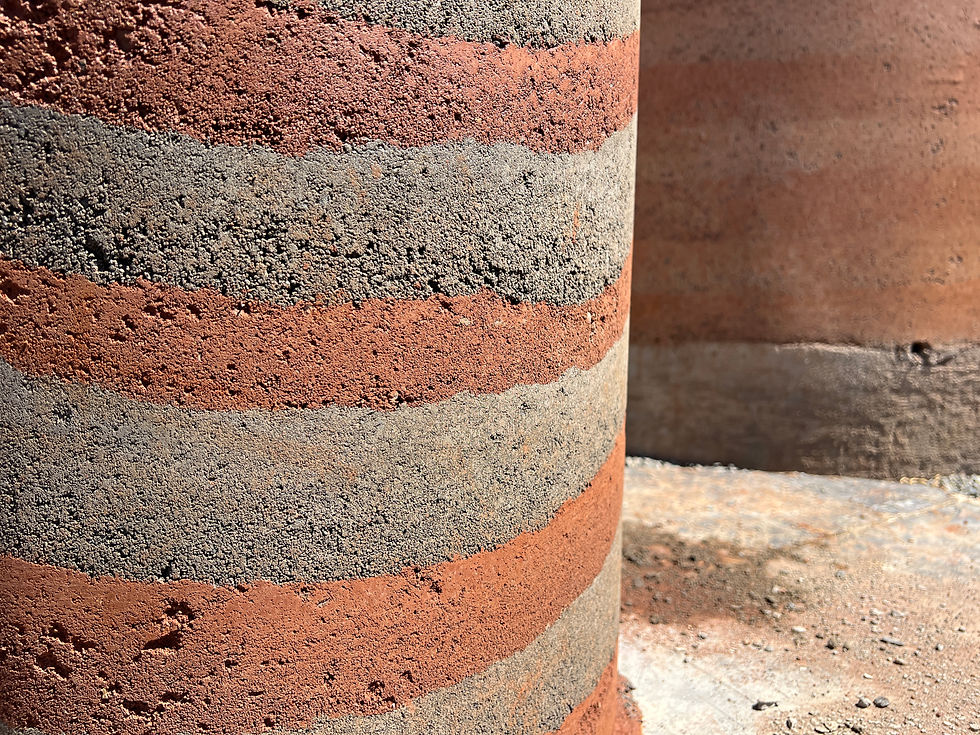

Volcanic Black · Rift Stone · Tsavo Red
This wall combines deep charcoal, weathered grey and rich red earth tones,
creating a dramatic layered finish inspired by volcanic landscapes and the red soils of East Africa.
The exposed grains and visible ramming lines give the surface a raw, natural texture that changes with light.
“Three soils. Three characters. One wall shaped from the earth.”
Savannah Strata
This finish uses alternating natural earth tones to create a rhythmic, almost hand-crafted pattern. The soft beige,
warm ochre and grey-brown bands give the wall a strong African character,
while the visible grains and slightly rough texture keep the material honest and natural.
“Layer by layer, the landscape becomes architecture.”


Highland Earth
This wall has a softer, more natural brown character, with visible stones, grains and ramming layers giving it a raw, handcrafted appearance.
The lower section feels smoother and more compact, while the upper lifts are intentionally more textured,
showing the material and construction process.
It has the character of weathered earth and traditional African building, but expressed in a modern rammed-earth wall.
“Raw earth, visible layers, naturally crafted.”
Heritage Clay
A warm, earthy rammed-earth finish with soft brown tones and subtle horizontal layers. Compared with the rougher samples, this wall has a more refined and compacted surface, while still keeping the natural grain, small stones and hand-crafted character of earth.
The colour feels calm, grounded and distinctly African — inspired by acacia bark, dry savannah soil and traditional earth-built homes.
“Simple earth, refined by craft.”


Dune Earth - DESERT
This wall has a soft sandy-beige tone with darker natural bands, giving it a calm, weathered appearance. The visible ramming layers and exposed grains create a textured surface that feels almost like sedimentary rock formed naturally over time.
Its pale colour gives the rammed earth a lighter, more contemporary character while still keeping the raw identity of soil.
“Soft earth tones, layered naturally into architecture.”
Sunset Earth

This wall carries a rich sun-baked orange and terracotta character, with soft horizontal bands created naturally through the ramming process.
The exposed grains and changing tones give it warmth and movement, almost like layers of earth shaped by time.
The finish feels especially connected to East African soil, dry landscapes and traditional earth architecture, while still looking contemporary.
“Warm earth, layered by hand, shaped into architecture.”

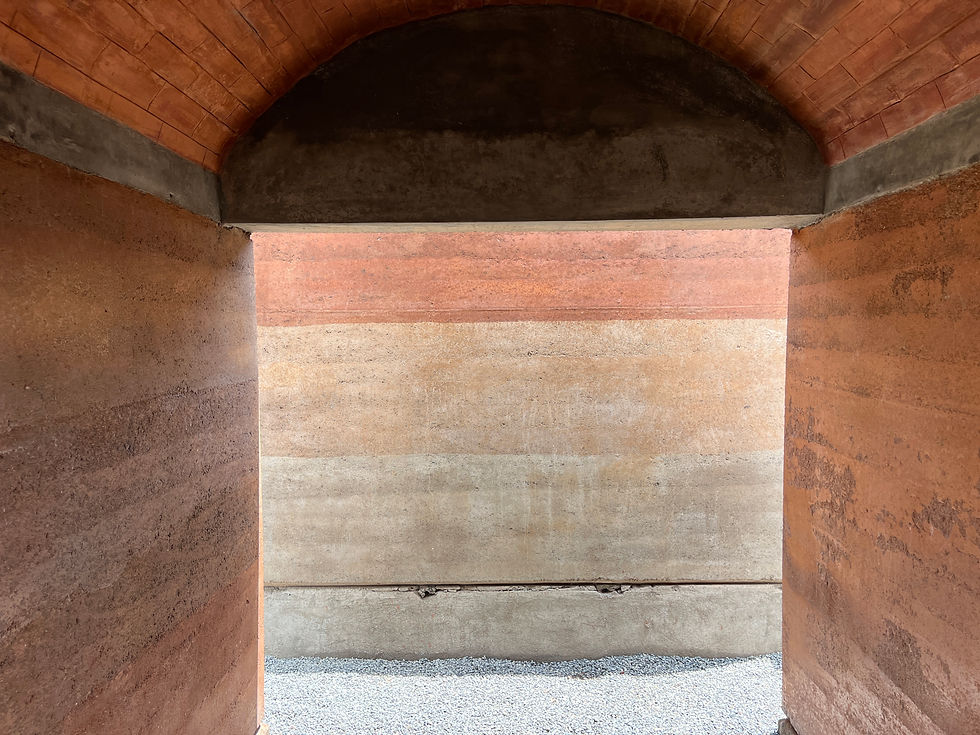
Self-Supporting Earth Vault
This vaulted roof is designed to support itself through compression, allowing the curved form to carry loads toward the supporting walls without relying on a conventional flat slab.
The vault creates a strong architectural character while pairing beautifully with rammed-earth walls, using geometry and compression rather than excessive structural material.
“A roof shaped by geometry — self-supporting, expressive and rooted in traditional building knowledge.”
Earth & Compression
This space combines rammed-earth walls with a self-supporting vaulted roof,
where the curved geometry allows the vault to carry loads mainly through compression and transfer them toward the supporting walls.
The result is a warm, sculptural interior that brings together earth, masonry and traditional vault-building principles in a contemporary way.
“Built with earth below, shaped by compression above.”

TerraCraft.Earth at the Pan African Biennale
Our rammed-earth pieces at the Pan African Biennale explored earth beyond architecture — transforming the same material used for walls into sculptural furniture and functional objects.
The layered colours, exposed grains and curved forms celebrate the natural character of soil while showing how rammed earth can move from building material to contemporary African design.
“From the ground, to the wall, to the object — earth becomes design.”
Earth That Feels Familiar
There is something deeply familiar about seeing soil become a wall. It reconnects us with the way generations before us built homes and huts directly from the land — using earth not only as a material, but as part of everyday life.
Rammed earth carries that memory forward in a new form: stronger, more refined and contemporary, but still honest to its origin. The colour, texture and visible layers make the wall feel warm, grounded and human.
“The same earth our fathers built with, reimagined for the architecture of today.”

Earth Sculpted into Form
These rammed-earth pieces show how soil can move beyond walls and become sculpture, furniture and functional design.
Their tapered and cylindrical forms reveal the natural layers of compaction, while the rough grains and changing earth tones give every piece its own character.
The forms feel contemporary, yet the material carries a strong memory of traditional African earth building and hand-shaped objects made from the land.
“From soil to sculpture — the earth becomes an object of design.”
Sunlight on Earth
When sunlight hits a rammed-earth wall, the material comes alive. The light catches every grain, layer and slight imperfection, making the surface feel warmer, deeper and more tactile.
The red earth becomes richer, the pale tones become softer, and the shadows reveal the hand-crafted texture of the wall. It creates a feeling that is warm,
grounded and almost timeless — like the building belongs naturally to the land around it.
“When the sun touches earth, the wall begins to tell its story.”


Volcanic Earth Sculpted Rammed Form
This piece shows how rammed earth can take on a completely different character through dark volcanic soil tones. The deep charcoal colour,
exposed grains and visible compaction bands make the surface feel bold, raw and sculptural.
Despite its almost stone-like appearance, the piece is made from compacted earth — not concrete and not painted black.
“Earth can be red, brown, grey or almost black — every soil carries its own identity.”