Sustainable Construction and the Daily Carbon Footprint of Modern Building Practices
- Maurine

- Jul 21
- 8 min read
Modern construction creates places to live, work, heal, learn, and trade. It also releases carbon every day, often before a building is even occupied. A lorry delivering cement, a diesel mixer running on site, a generator powering tools, offcuts going to waste, water being pumped, steel being lifted, and concrete curing in the sun all add to the daily environmental cost of building.
That cost is easy to miss because construction happens in stages. One day may look small. A few deliveries. A few machines. A few tonnes of material. Yet across estates, roads, warehouses, apartments, schools, malls, and public infrastructure, the daily carbon load becomes large.
Sustainable construction asks a practical question: how can we keep building what society needs while cutting avoidable emissions, waste, and resource damage? The answer is not one material, one design trend, or one certification. It is a chain of better choices, made from planning to handover.
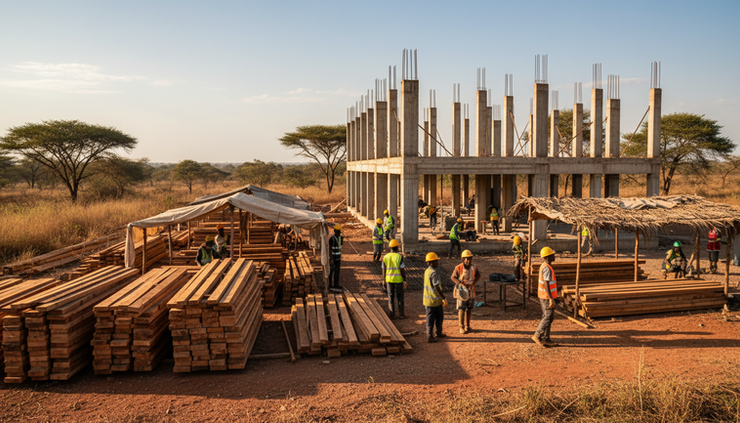
What daily carbon emissions look like on a construction site
A building’s carbon impact comes from two broad sources.
Embodied carbon is the carbon released through materials, transport, construction, replacement, and disposal. It includes the emissions tied to cement, steel, aluminium, glass, blocks, tiles, finishes, and all the fuel used to move and install them.
Operational carbon is the carbon released after the building opens. It comes from energy used for lighting, cooling, heating, water pumping, lifts, appliances, and maintenance.
Modern building practices often focus on speed, strength, and cost. Those priorities matter. A structure must be safe, durable, and financially viable. The problem appears when carbon is treated as invisible. On a typical active site, emissions can come from:
Diesel excavators, cranes, trucks, compactors, and generators
Cement-rich concrete mixes
Steel reinforcement and structural steel
Long-distance material transport
Material waste from poor storage or over-ordering
Rework caused by design changes or poor coordination
Temporary site offices, lighting, water pumps, and power tools
Waste disposal, especially when materials are not sorted
This is why the phrase carbon foot print matters in construction. It is not only about the final building. It is about the daily trail left by each decision, delivery, machine, and material.
A sustainable site does not wait for the building to be complete before thinking about carbon. It measures and reduces carbon during the work itself.
Why modern construction has such a large footprint
Construction is carbon-heavy because it relies on materials that need high heat, heavy extraction, and long transport chains.
Cement is the biggest example. Making cement requires heating limestone and other materials at very high temperatures. The process releases carbon both from fuel and from the chemical reaction itself. Concrete then becomes carbon-intensive when used in large volumes or oversized structural elements.
Steel is another major contributor. It gives buildings strength and flexibility, but producing it takes large amounts of energy. Glass and aluminium can also carry high embodied carbon, especially when buildings use large glazed surfaces that increase cooling demand.
The footprint grows further when projects use standard designs without adapting to climate. In hot regions, a building with too much unshaded glass may need constant mechanical cooling. That shifts the problem from construction emissions to long-term operational emissions.
Poor planning adds another layer. A rushed project may order excess materials, damage supplies through bad storage, or demolish and redo work after changes. Every mistake has a carbon cost.
A low-carbon building is not only built with better materials. It is built with fewer mistakes, shorter journeys, smarter design, and less waste.
For East African cities and towns, this issue is urgent. Urban growth is strong, housing demand is high, and infrastructure needs are real. Conversations about sustainability in Kenya, Nairobi east Africa, Tanzania, Uganda, Ethiopia must therefore stay practical. The region needs more buildings, not fewer. The challenge is to build them in a way that consumes less energy, wastes fewer materials, and performs better in the local climate.

The daily choices that make construction more sustainable
Sustainability does not always mean adding expensive technology. Many low-carbon gains come from design discipline, procurement discipline, and site management.
Design for the local climate
A building in Nairobi, Kisumu, Mombasa, Arusha, Kampala, or Addis Ababa should respond to its climate and surroundings. Passive design can reduce the need for artificial cooling and lighting.
Good passive design may include:
Correct building orientation to reduce heat gain
Roof overhangs, verandas, fins, or screens for shading
Cross-ventilation through well-placed openings
Courtyards and shaded outdoor circulation
Light-coloured roofs and external finishes
Trees and planted areas that cool the microclimate
High ceilings where suitable to improve airflow
Daylighting without excessive glare
These measures reduce operational carbon for decades. They also improve comfort, especially where electricity costs or outages make heavy mechanical cooling unreliable.
Use materials carefully, not just differently
There is no perfect material. Timber, concrete, steel, stone, earth blocks, glass, and recycled products all have strengths and limits. The goal is to match the material to the job and avoid wasteful use.
A structural engineer can reduce unnecessary concrete by designing efficient spans, columns, slabs, and foundations. Architects can avoid decorative features that add material without improving performance. Contractors can protect materials from rain, mud, breakage, and theft.
Lower-carbon material choices may include:
Cement blends that reduce the amount of clinker where suitable and compliant
Recycled steel where available and verified
Locally made blocks or stone to reduce transport distances
Stabilised soil blocks for appropriate walling applications
Responsibly sourced timber for non-structural or structural uses where permitted
Reused materials from careful demolition
The key word is appropriate. A low-carbon material used badly can fail, create maintenance problems, or require replacement. Durability is part of sustainability.
Reduce diesel use on site
Many construction sites run on diesel for excavation, lifting, mixing, pumping, and temporary power. Some fuel use is unavoidable, but poor scheduling makes it worse.
A site can cut daily fuel emissions by:
Planning deliveries to avoid half-empty trips
Maintaining machinery so engines run efficiently
Turning off idle equipment
Sharing equipment instead of duplicating it on site
Using grid power where reliable and available
Considering electric tools and small equipment where practical
Grouping tasks so machines work in planned blocks of time
These steps also save money. Fuel wastage is both an environmental problem and a cost problem.
Waste is carbon in physical form
Construction waste is often treated as a disposal issue. It is more than that. Every broken tile, bent bar, damaged board, hardened cement bag, and rejected block represents carbon that has already been emitted.
A project can reduce waste before it reaches the skip.
Good waste control starts with accurate quantities. Over-ordering may feel safe, but excess materials often get damaged or dumped. Under-ordering creates extra trips and delays. Both add emissions.
Storage matters too. Cement should stay dry. Timber should be stacked off the ground. Blocks and tiles should be handled carefully. Aggregates should be separated to avoid contamination.
Design coordination also prevents waste. When architects, engineers, quantity surveyors, and contractors work from mismatched drawings, rework follows. A wall may be chased twice. A slab opening may be cut after casting. Services may clash with beams. Each correction uses labour, energy, and more material.

Practical waste reduction includes:
Ordering standard sizes to reduce cutting
Using modular dimensions where possible
Separating timber, metal, masonry, plastic, and packaging
Reusing formwork carefully
Returning pallets or packaging when suppliers allow it
Keeping a simple waste log by material type
Training workers to report avoidable waste early
Waste control works best when it is measured. If a site tracks what gets thrown away each week, patterns become visible. The team can then fix the cause, not just clear the mess.
Transport can quietly raise a project’s footprint
A project may choose a good material but lose the benefit through transport. Heavy materials such as sand, stone, blocks, cement, and steel carry a transport footprint, especially when moved over long distances by diesel trucks.
Local sourcing can help, provided quality is maintained. This does not mean buying the nearest product at any cost. It means comparing distance, durability, performance, availability, and supplier practices.
A project team can ask simple questions:
Can this material be sourced closer without lowering quality?
Can deliveries be combined to reduce trips?
Can the site receive materials on time without causing congestion?
Can suppliers use return trips instead of running empty?
Can excavated material be reused on site for backfilling or landscaping?
In dense urban areas, delivery timing also matters. Trucks stuck in traffic burn fuel while contributing to air pollution. Better logistics reduce both carbon and disruption.
Sustainable construction must include water and heat
Carbon is central, but sustainability is broader. Construction also affects water, soil, air, biodiversity, and public health.
Water use on site can be high. It is needed for mixing, curing, dust control, cleaning, and welfare facilities. Wasteful water use increases pumping energy and strains local supply. Rainwater harvesting during construction, careful curing methods, and leak control can lower demand.
Heat is another issue. Large paved areas and dark roofs absorb and hold heat. Buildings that ignore shade and airflow can become uncomfortable and expensive to cool. This is especially relevant as cities grow denser.
Sustainable buildings should reduce heat build-up through:
Shaded pedestrian areas
Trees and permeable landscaping
Cool roofs or reflective roof finishes
Natural ventilation paths
Reduced hard paving where possible
External shading for windows
These choices improve comfort and reduce long-term energy demand.
The role of architects, engineers, developers, and contractors
Low-carbon construction is a team effort. No single professional can deliver it alone.
Architects influence shape, orientation, shading, space planning, and material expression. Engineers influence structural efficiency, services, water systems, and energy demand. Quantity surveyors influence procurement, cost control, and material quantities. Contractors influence site operations, waste, equipment use, and workmanship. Developers and clients set the brief, budget, and level of ambition.
The best results come when carbon is discussed early. If the topic appears after approvals, procurement, and mobilisation, options become limited.
A practical low-carbon brief might ask the team to:
Compare two or three structural options before final design
Reduce cement content where standards and engineering allow
Track waste by material type
Prioritise passive cooling before mechanical systems
Protect existing trees where possible
Source key materials responsibly
Design for repair, maintenance, and future adaptation
Prepare a simple carbon and resource-use report at handover
These steps do not need to delay a project. In many cases, they reduce risk because the team makes clearer decisions earlier.
Measuring carbon without making it complicated
Some projects use advanced carbon assessment tools. Large developments may need detailed life cycle assessments. Smaller projects can still make progress with a simpler approach.
Start by listing the main carbon sources:
Project area | What to track | Practical improvement |
Concrete | Volume used and mix type | Reduce unnecessary volume and review cement content |
Steel | Tonnes ordered and waste | Design efficiently and store properly |
Transport | Number of deliveries and distance | Combine deliveries and source closer where suitable |
Site fuel | Diesel used by equipment | Maintain machines and reduce idling |
Waste | Skips or tonnes by material | Sort waste and prevent damage |
Energy design | Cooling, lighting, pumping needs | Use passive design and efficient systems |
The purpose is not perfection. The purpose is direction. Once a team can see the main sources, it can make better decisions.
A small apartment block may not need a complex carbon model to start improving. It can still reduce concrete waste, limit diesel idling, improve shading, source durable materials, and design for airflow. Those choices compound across hundreds of projects.

What better daily practice looks like
A lower-carbon construction day looks organised. The site receives full, planned deliveries instead of repeated emergency trips. Materials are covered and labelled. Machines work on schedule and switch off when idle. Workers sort waste into usable categories. Supervisors check drawings before work begins. The design uses shade, airflow, and daylight instead of depending only on mechanical systems.
The building itself is not overdesigned. It uses enough material to be safe and durable, but not more than needed. It respects the climate. It can be maintained without constant replacement. It gives occupants comfort without wasting energy.
Sustainable construction is often described as a future goal, but many of its habits are available now. They are practical, visible, and measurable.
The daily carbon footprint of modern building practices will not fall through slogans. It will fall when each project treats carbon like cost, safety, and quality. Something to plan, track, manage, and improve.
The takeaway is simple: build what is needed, use only what is necessary, waste as little as possible, and design every building to perform well for decades. That is how modern construction becomes part of a lower-carbon future, one site day at a time.


Comments